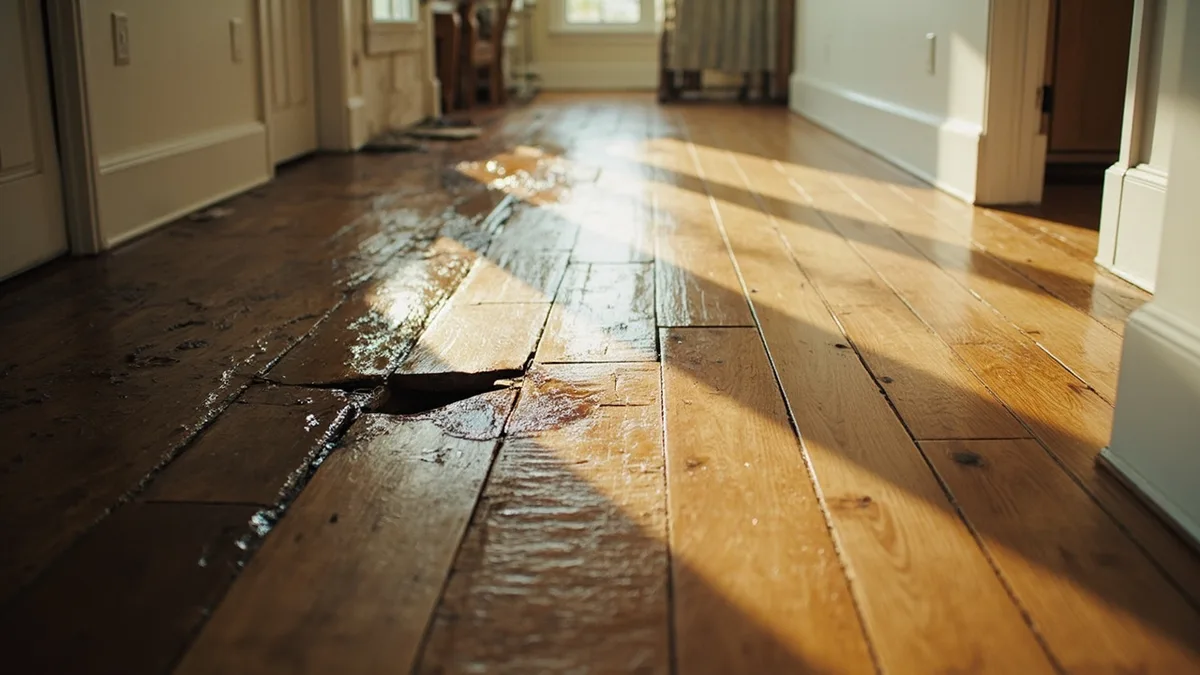
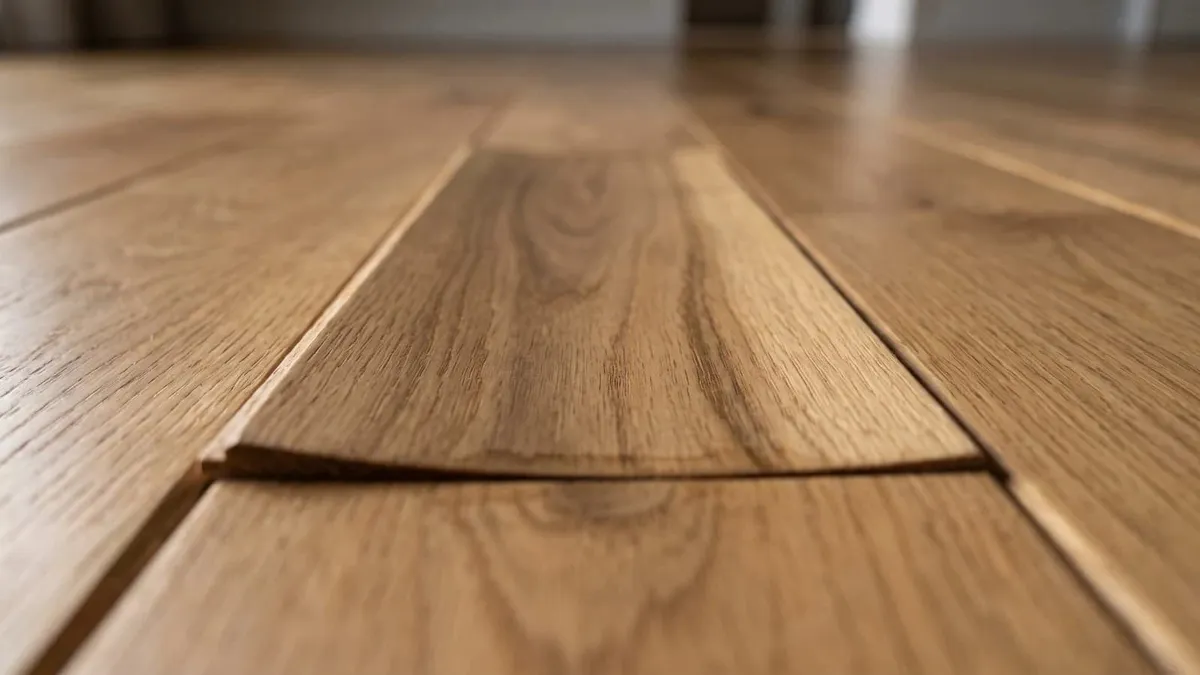
How Long Does It Take to Dry Hardwood Floors?
With professional drying, most water-damaged hardwood floors take about 3 to 14 days to dry, depending on how wet the wood got, how long it sat, and what is underneath. Drying is done when moisture readings in the wood match a dry part of the same floor, not after a set number of days.
Wood dries slowly by design. Pull water out too fast and the boards can crack or split; too slow and mold has time to start. The goal is even, controlled drying.
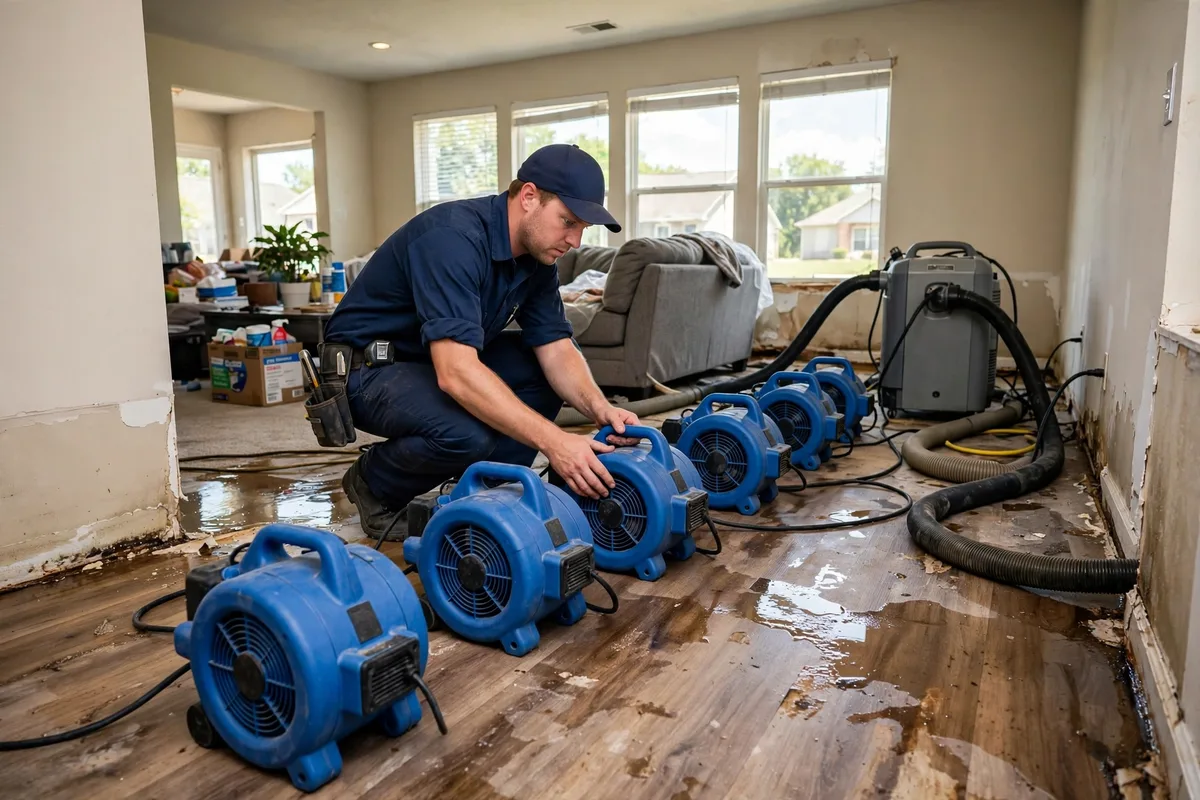
Typical Drying Times
| Situation | Typical Professional Drying Time |
|---|---|
| Small clean-water spill caught within hours | 2 to 4 days |
| Appliance or supply line leak, a day or less | 4 to 7 days |
| Leak that ran under the floor for a day or more | 7 to 14 days |
| Wet subfloor or slab underneath | Often 10 days or more |
| Long-running hidden leak with cupping | Up to 2 or 3 weeks |
These are typical ranges, not promises. Daily moisture readings tell the real story.
What Speeds Drying Up
- Starting fast. Drying that begins the same day is shorter than drying that begins after a weekend.
- Specialty floor drying mats that pull moisture up and out of the boards.
- Dehumidifiers that keep the room air dry so the wood can release moisture.
- Drying from below when there is a crawl space or basement under the floor.
- Removing what traps water, like rugs, pad under floating floors, or baseboards.
What Slows It Down
- A wet slab or subfloor. Concrete and particleboard hold water for a long time.
- Finishes and sealants on top of the wood that slow evaporation.
- Tulsa's humid summers. High outdoor humidity makes the indoor air harder to keep dry without equipment.
- Thick or dense wood species like oak and hickory, which release moisture slowly.
- Fans only. Fans dry the surface while moisture stays deep in the board, which can cause crowning later.
How "Dry" Is Measured
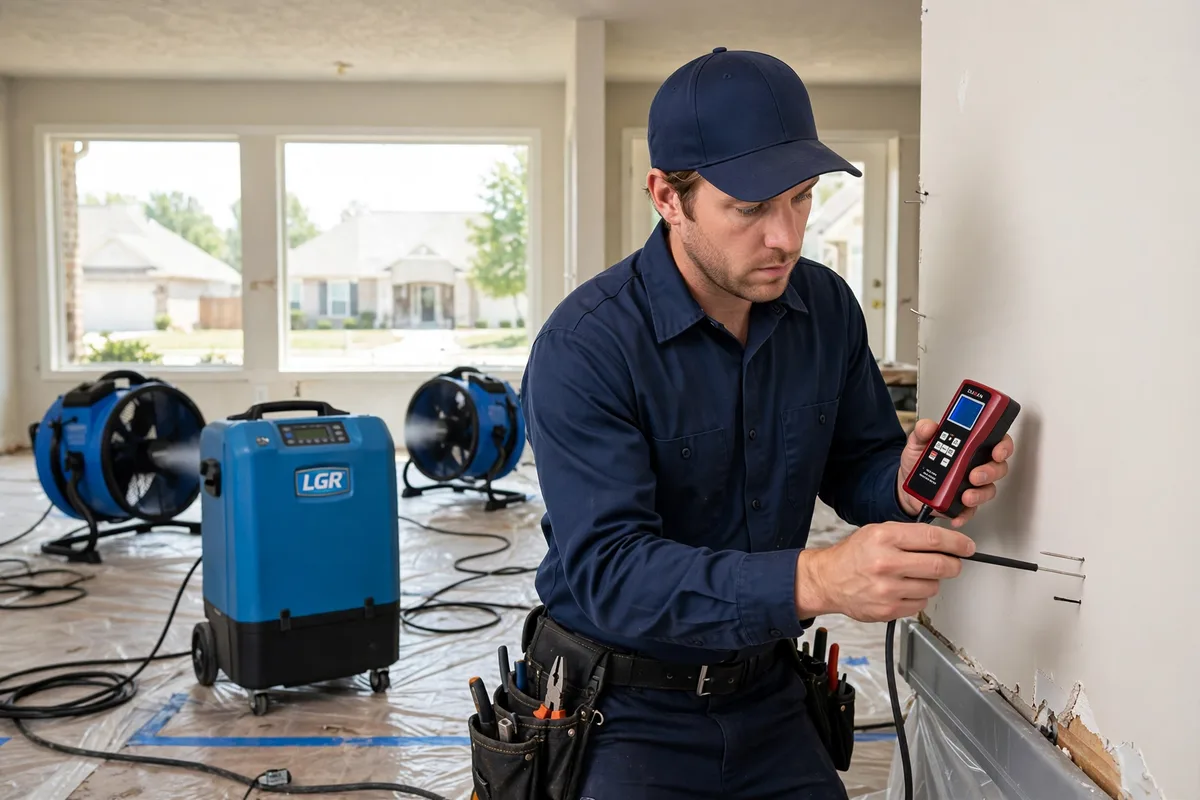
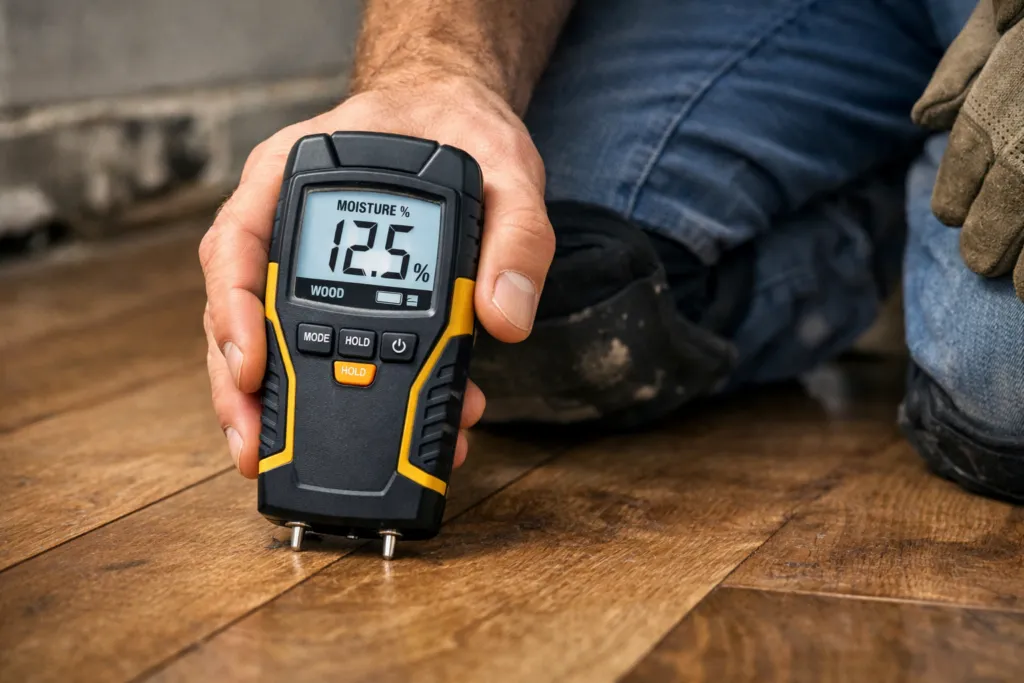
Technicians use moisture meters in several spots on the wet floor and in a dry room with the same flooring. That dry room is the baseline. The floor is considered dry when the wet area reads within a few points of the baseline and the subfloor is dry too. It is the same method used in structural water mitigation, following the IICRC S500 standard.
A Typical Drying Timeline
- 01
Day 1: water extracted, moisture mapped, mats and dehumidifiers set up
- 02
Days 2 to 4: readings taken daily; most surface moisture is gone; cupping may start to relax
- 03
Days 5 to 10: deeper moisture comes out of the boards and subfloor
- 04
Final check: readings match the dry baseline; equipment comes out
- 05
Wait period: the wood is allowed to settle before any sanding or refinishing
Why You Should Wait Before Refinishing
Even after drying, wood needs time to stabilize. Sanding too soon can leave you with crowning or gaps once the boards finish settling. Here is why you should not sand cupped hardwood floors too early.
Hardwood Drying FAQ
Hardwood Drying FAQ
Usually yes, carefully, around the equipment. Avoid moving furniture back until drying is done.
A small spill caught right away, sometimes. Larger leaks need professional mats, dehumidifiers and moisture readings to dry evenly, which is what hardwood floor water damage restoration is for.
Only with moisture readings in the subfloor or slab. It can look and feel dry long before it actually is.
That usually means water is still getting in, or the subfloor is wetter than it looked. The source and the readings get rechecked. In slab-built Tulsa homes, a hidden slab leak under the floor is a common reason.
Do Not Wait
Wet Hardwood in Your Tulsa Home? Call Now.
Call (918) 347-0890 and a hardwood floor drying crew is dispatched immediately anywhere in the Tulsa metro.
24/7 Emergency Helpline
(918) 347-0890Keep Exploring