TULSA RAPID DISPATCH: On-Site in Under 60 Minutes

Get Help Now (918) 347-0890

Hardwood Floor Drying in Tulsa, OK Save Cupped and Water-Damaged Wood Floors

Vacuum Floor Mat Drying & Cupping Timber Reversal.

Hardwood is one of the few floors that can often be saved after water, if drying starts quickly and is done in a controlled way. Our Tulsa crews dry water-damaged solid and engineered hardwood by removing surface water, measuring moisture in the wood and subfloor, and using controlled drying to bring the boards back toward their normal moisture level. We answer 24 hours a day and aim to arrive within 60 minutes.

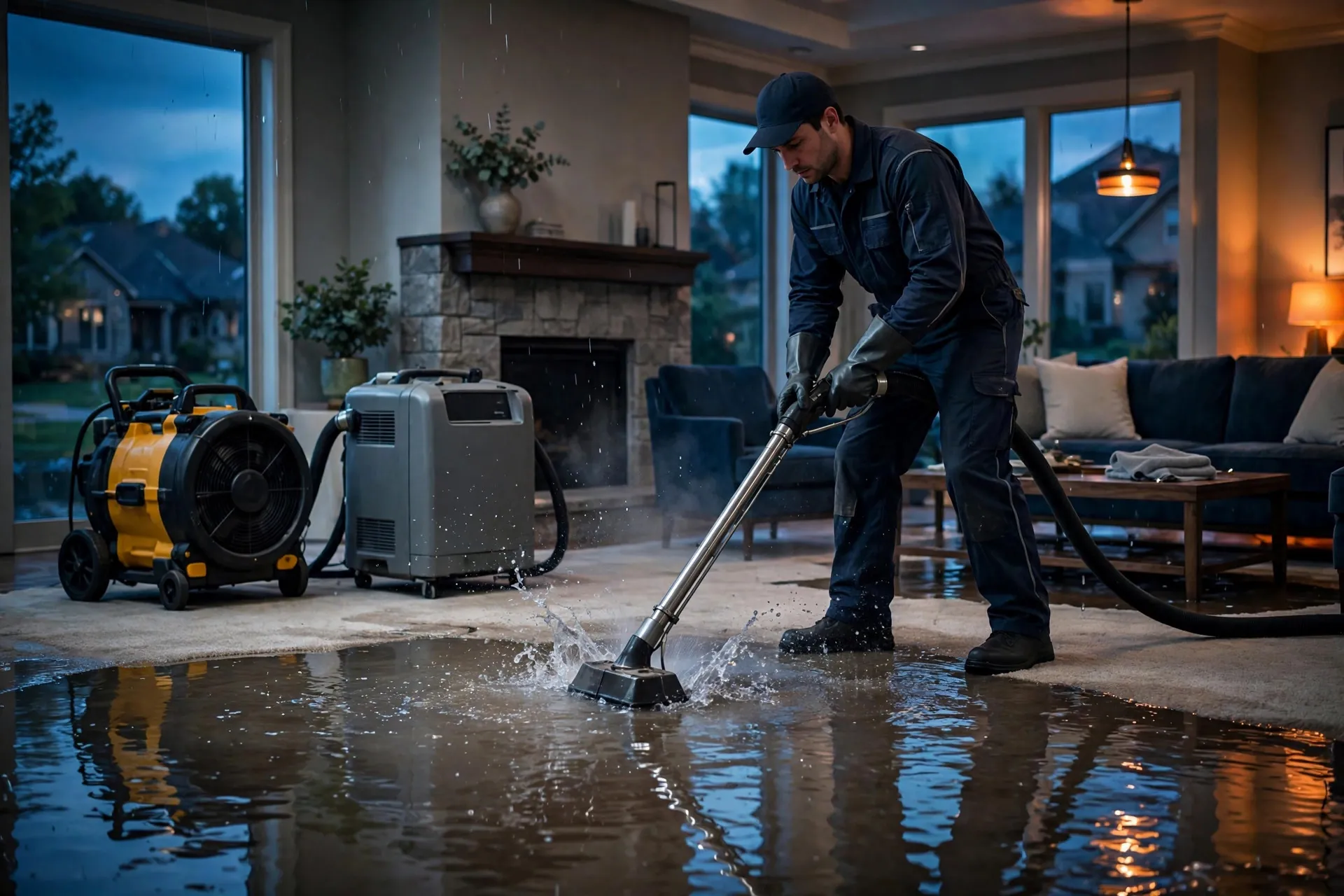
Restored Tulsa home interior after water damage repairWater damage restoration technician extracting flood water in a Tulsa homeTechnician performing thermal moisture mapping in Tulsa OKWater damaged ceiling and drywall repair in Tulsa OK

The Honest Answer

Can Water-Damaged Hardwood Floors Be Saved?

Often yes, if these are true:

  • The water was clean (a supply line, appliance or early rain intrusion), not sewage or flood water
  • Drying begins within about 24 to 72 hours
  • The boards have not buckled (lifted off the subfloor)
  • The floor is solid or thick-veneer engineered wood, not laminate or floating click-lock

Often not, if:

  • The water was Category 3 (sewage or outside flood water)
  • Boards have buckled, crumbled or been wet for weeks
  • The floor is laminate, thin-veneer engineered or a floating floor
  • Mold is already growing under the floor

A technician checks moisture in the boards and subfloor and gives you an honest call on what is worth drying.

Before We Arrive

What to Do Right Now (Before the Crew Arrives)

  1. 01

    Stop the water at the source.

  2. 02

    Remove standing water and blot with towels.

    See Emergency Water Extraction if there is a lot.

  3. 03

    Lift rugs, mats and furniture off the floor.

    Rugs and wet cardboard trap moisture.

  4. 04

    Keep air moving gently

    with the air conditioning on and ceiling fans running.

  5. 05

    Do not cover the floor with plastic.

    It traps moisture against the wood.

  6. 06

    Do not use heat guns, hair dryers or space heaters on the floor.

    Fast, uneven drying can crack boards.

  7. 07

    Do not sand, seal, wax or refinish

    until the wood is dry and stable.

  8. 08

    Do not pull up boards yourself

    unless a technician advises it.

  9. 09

    Take photos

    of the floor, the water source and the date.

  10. 10

Read the Floor

Cupping, Crowning and Buckling What Each Means

ConditionWhat you seeCauseUsually savable?
CuppingBoard edges higher than the center, like a shallow dishUnderside of board holds more moisture than the topOften, once dried and stabilized
CrowningCenter higher than edgesCupped floor sanded too soon, or top surface wetter than bottomOften, can be re-sanded after it stabilizes
BucklingBoards lift off the subfloor, sometimes in a ridgeSevere, long-term moistureRarely, boards often need replacing
GappingSpaces between boardsWood shrinks after drying, or very dry airNormal after drying, may close with humidity

Wood swells when wet and shrinks when dry. Cupping can keep developing for days after the leak. That is why monitoring matters.

Know Your Floor

Which Floors Dry Well and Which Do Not

Floor typeWater toleranceTypical outcome
Solid hardwood (3/4")Best of all wood floorsOften dried and saved
Engineered hardwood, thick wear layerGood if glued or nailed down and caught earlyOften saved, may be refinishable
Engineered hardwood, thin veneer or floatingPoorOften replaced, especially if water got between boards
Glue-down over concreteMoisture is trapped under the woodCase by case, often challenging
Laminate (fiberboard core)Swells permanentlyUsually replaced
Luxury vinyl plankPlastic does not swell, but water can sit under itOften lifted and dried, then reinstalled or replaced
BambooSimilar to engineered hardwoodCase by case

Laminate and vinyl are not hardwood, but people often call them "wood floors." We will tell you which one you have.

Controlled, Not Rushed

How We Dry Water-Damaged Hardwood Floors

Wood dries slowly and must not dry too fast. The goal is controlled drying that brings moisture content back to your home's normal level without cracking boards.

  1. 01

    Remove surface water.

    Standing water is extracted first.

  2. 02

    Measure.

    A moisture meter reads the boards and the subfloor. We compare readings to unaffected flooring in a dry room to set the dry standard.

  3. 03

    Expose and ventilate.

    Baseboards or quarter-round are often removed so air can reach edges and wall bases. Small openings below the floor, such as in a crawl space, may be used to move air.

  4. 04

    Dry from the top.

    Air movers and dehumidifiers dry the surface and the air. Many floors dry well this way.

  5. 05

    Dry from below.

    If there is a crawl space or unfinished basement, air can be moved under the floor.

  6. 06

    Control the drying rate.

    We avoid heating the floor aggressively, which can cause cracks, checking or splits.

  7. 07

    Monitor daily.

    Boards and subfloor are measured until they are close to the dry standard, usually within a few percentage points of unaffected flooring.

  8. 08

    Let the floor settle.

    After drying, cupped boards may slowly flatten. Refinishing or repairs are decided after the floor is stable.

Standing water still on the floor? See Emergency Water Extraction. For the broader drying process, see Water Mitigation.

Patience Pays

Why You Should Not Sand a Wet or Cupped Floor Yet

If a cupped floor is sanded flat while the bottom of the boards is still wet, the boards can crown (the center rises) once they dry. Sanding also removes finish that was slowing moisture loss and can seal in damage.

Wait until:

  • Moisture readings are back to normal and stable
  • The floor has had time to settle, which can take days to several weeks
  • Any cupping that is going to relax has done so

Then decide on sanding, repairs or replacement. A good flooring contractor will ask for moisture readings before sanding.

Typical Ranges

How Long Does Hardwood Floor Drying Take?

SituationTypical time
Small spill, caught within a day, solid floorSeveral days
Wet room, solid floor, early responseAbout 1 to 2 weeks
Water under the floor, thick boards, subfloor wet2 weeks or more
Floors that already cupped or sat wet for daysLonger, with uncertain results

After drying, flattening and refinishing can add days to weeks. These are typical ranges. Humidity, wood species, thickness and how long it was wet change them.

When Drying Is Not Enough

When Hardwood Needs to Be Replaced

  • Boards are buckled, crumbling or delaminating
  • The water was Category 3
  • Mold is growing on or under the boards
  • The floor is laminate or a floating engineered floor with water between boards
  • Subfloor is soft or damaged
  • Drying is not working, shown by readings that stop dropping
  • Cost of repair would exceed replacement

Replacing a section, not the whole floor, is sometimes possible. Matching existing finish and species can be a challenge, so ask your flooring contractor.

Local Knowledge

Hardwood Floors in Tulsa Homes

Older homes.

Many homes in Midtown, Maple Ridge, Florence Park, Brookside and Cherry Street, built from the 1920s through the 1950s, have solid oak strip floors over plank subfloors, often with a crawl space beneath. Solid wood like this can often be dried and saved, and the crawl space allows air to be moved under the floor.

Newer homes on slab.

Many South Tulsa, Jenks, Bixby and Broken Arrow homes have engineered wood glued over concrete or floating over a pad. Water can be trapped under the floor and in the slab, which makes drying slower and replacement more likely.

Humid summers, dry winters.

Oklahoma's seasonal swings move wood floors in and out of moisture balance. The drying target is set by readings in your own home, compared with unaffected flooring.

Common causes locally: burst or leaking pipes (see Burst & Frozen Pipe Cleanup), dishwasher and refrigerator lines, water heater leaks, storm leaks and ground flooding.

Insurance Claims

Hardwood Floors and Your Insurance Claim

Water from a sudden, accidental source, like a burst pipe or appliance failure, is commonly covered. Gradual leaks and outside flood water often are not.

We provide photos and moisture records, and work with your adjuster. Coverage is decided by your insurer. Questions about your coverage? Call (918) 347-0890.

Honest Pricing

What Affects the Cost of Hardwood Floor Drying

  • Square footage of wet flooring
  • Solid vs engineered vs glue-down
  • Whether water is under the floor or in the subfloor
  • Number of drying days and equipment
  • Whether baseboards or boards must be removed
  • Whether refinishing or replacement follows

Drying is almost always cheaper than replacing, when the floor can be saved. Starting early is the biggest factor.

Fast Response Coverage

Areas We Serve for Hardwood Floor Drying

Not sure we cover your address? Call (918) 347-0890.

Hardwood Drying FAQ

Hardwood Floor Drying FAQ

Often, yes. Cupping usually results from moisture in the underside of the board. If the floor is dried in a controlled way and the boards have not buckled, many cupped floors flatten or become refinishable.

Commonly about 1 to 2 weeks for solid floors, longer if the subfloor or the space below is wet. Flattening and refinishing come after.

If the underside is still wet, sanding flat can lead to crowning when the boards finish drying. Sanding should wait until moisture readings are back to normal and stable.

Sometimes. Thick, glued or nailed engineered floors dry better than thin or floating ones. Water between boards or under a floating floor is difficult to remove.

Often close, sometimes with minor gapping or refinishing needed. Severe damage, stains or buckling can change that.

Only if a technician advises it. Removing boards can help in some cases, but doing it incorrectly can damage the floor.

Fans and a dehumidifier help on small, fresh spills. For water under boards, in the subfloor or in thick wood, readings and controlled drying are what decide success.

Yes. Moisture trapped under flooring can allow mold within 24 to 48 hours. See Mold Inspection & Testing and Mold Remediation.

Often, for sudden and accidental water. Gradual leaks and outside flood water may not be covered. Check your policy and call your insurer.

Yes. We answer 24 hours a day, 7 days a week.

Every Hour Matters

Wet or Cupping Hardwood Floors in Tulsa? Call Now.

Every hour matters for wood. The sooner drying starts, the more of your floor we can save.

24/7 Emergency Helpline

(918) 347-0890
(918) 347-0890