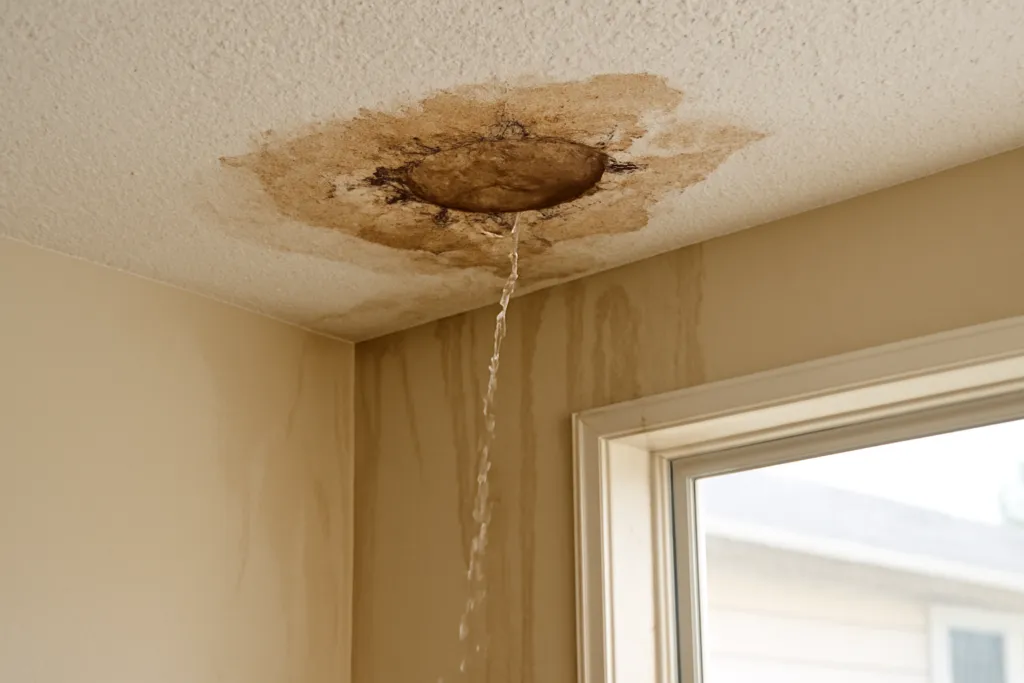
Ceiling Leaking After Rain: Is It the Roof or a Pipe?
If the ceiling leaks only during or right after rain, the roof, flashing, a vent boot or the gutters are the likely source. If it drips on dry days, keeps dripping long after the rain stops, or gets worse when someone showers or runs the dishwasher, look at the plumbing or the attic AC drain line instead. A 15-minute water meter test usually settles it.
Water rarely drops straight down. It can enter at the roof, run along a rafter or a pipe, and fall several feet away, so the stain on your ceiling is often not under the actual leak.
Roof, Pipe or AC? The Quick Clues
| Clue | Roof Leak | Plumbing Leak | AC Condensate |
|---|---|---|---|
| When it drips | During or after rain | Any time, or when fixtures run | Hot, humid days with the AC running |
| Where it shows | Near chimneys, vents, valleys, exterior walls | Under bathrooms, kitchens, attic pipes | Below the attic air handler |
| Water meter test | Meter stays still | Meter moves | Meter stays still |
| Stain behavior | Grows after storms, then dries out | Keeps spreading | Shows up in summer |
| Tulsa season | Spring storms and hail | Hard freezes and thaws | June through September |
The 15-Minute Water Meter Test
- Turn off every faucet, the ice maker, the washer and the dishwasher.
- Find your water meter, usually in a box near the curb, and note the dial or the small leak indicator.
- Wait 15 to 30 minutes without using any water.
- If the dial moved, water is escaping somewhere in the plumbing. If it did not, the roof or AC is the more likely source.
Where Tulsa Roofs Usually Let Water In
- Pipe vent boots. The rubber collars around plumbing vents dry out and crack under years of Oklahoma sun.
- Flashing around chimneys, skylights and where a roof meets a wall.
- Valleys, where two roof slopes meet and water runs fastest.
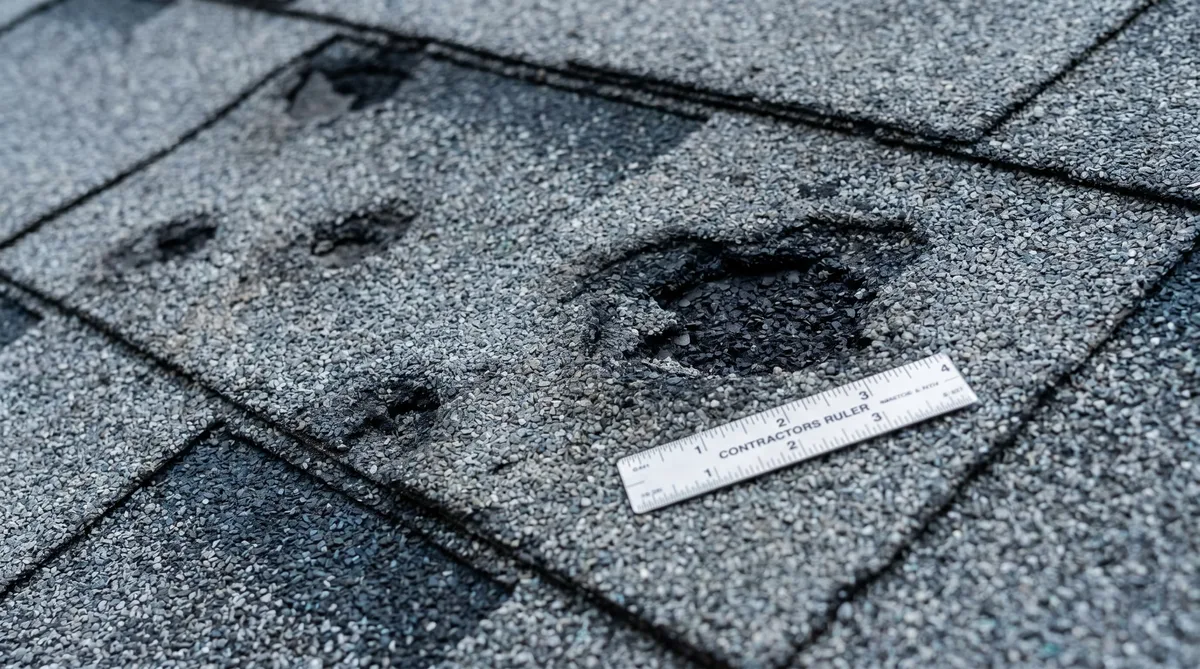
- Hail-damaged shingles. Spring hail can bruise shingles without an obvious hole, and the leak may not start until a later heavy rain.
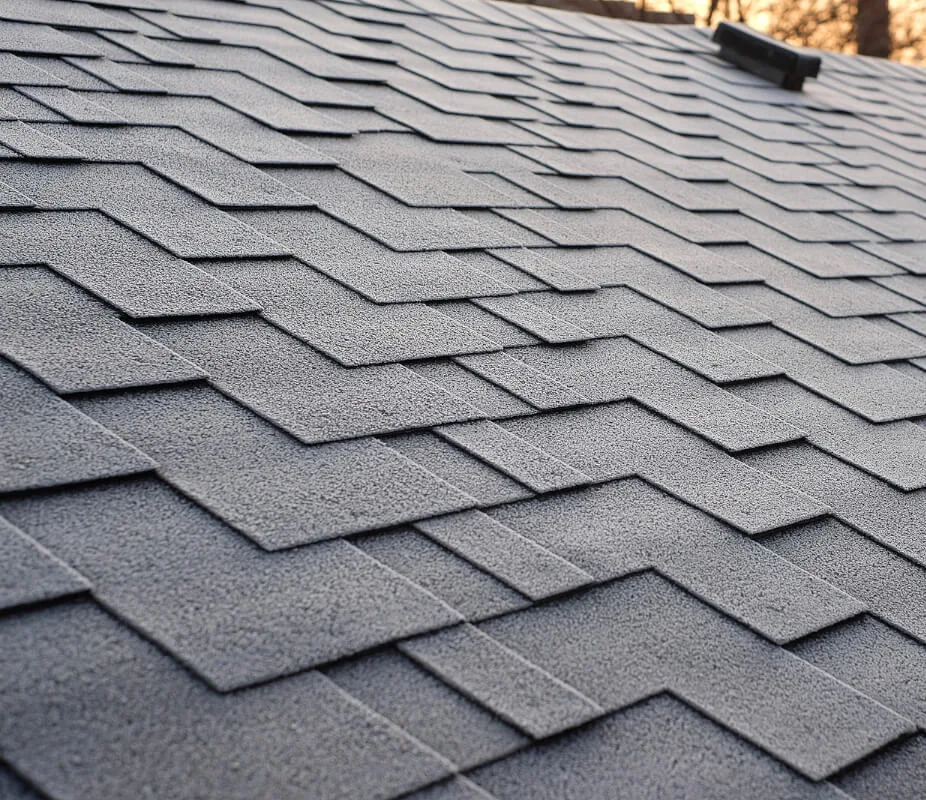
- Wind-lifted shingles after a strong storm line.
- Clogged gutters that back water up under the roof edge.
When a storm is the cause, the drying usually reaches past one ceiling into the attic, insulation and walls, which is where storm water damage restoration comes in.
What to Do While It Is Dripping
- Put a bucket and towels under the drip and move belongings out of the way.
- If the ceiling is bulging, clear the room. Here are the signs a sagging ceiling may come down.
- Check the attic with a flashlight if you can do it safely, stepping only on the joists.
- If it is plumbing, close the main water valve.
- Take photos of the ceiling, the attic and any storm damage outside.
- Have a licensed roofer tarp or repair the roof before the next rain.
After the Leak Is Fixed
A new shingle or boot stops the water, but it does not dry what got wet. Insulation stays soaked, the drywall stays damp, and the roof decking can hold moisture for days. That is the part handled by roof leak water damage cleanup: removing wet insulation, drying the attic and framing, and replacing the damaged ceiling.

Roof and Ceiling Leak Questions
Roof and Ceiling Leak Questions
Wind-driven rain gets under shingles and flashing that stay dry in a light shower, and overflowing gutters push water back under the roof edge.
Yes. Attics hold moisture and heat, and a slow leak can go unnoticed for weeks. If you smell must or see dark spots on the decking, mold testing in Tulsa shows how far it has spread before any repair.
That is almost always the AC. Condensate lines clog, the pan fills, and water spills onto the ceiling below. An overflowing AC drain line is one of the most common summer calls in Tulsa homes.
Sudden storm damage is commonly covered by Oklahoma homeowners policies. Leaks from worn-out roofing usually are not. Your insurer decides.
Do Not Wait
Water Coming Through the Ceiling? Call Now.
Call (918) 347-0890 and a crew is dispatched immediately anywhere in the Tulsa metro to stop the spread and start drying.
24/7 Emergency Helpline
(918) 347-0890Keep Exploring