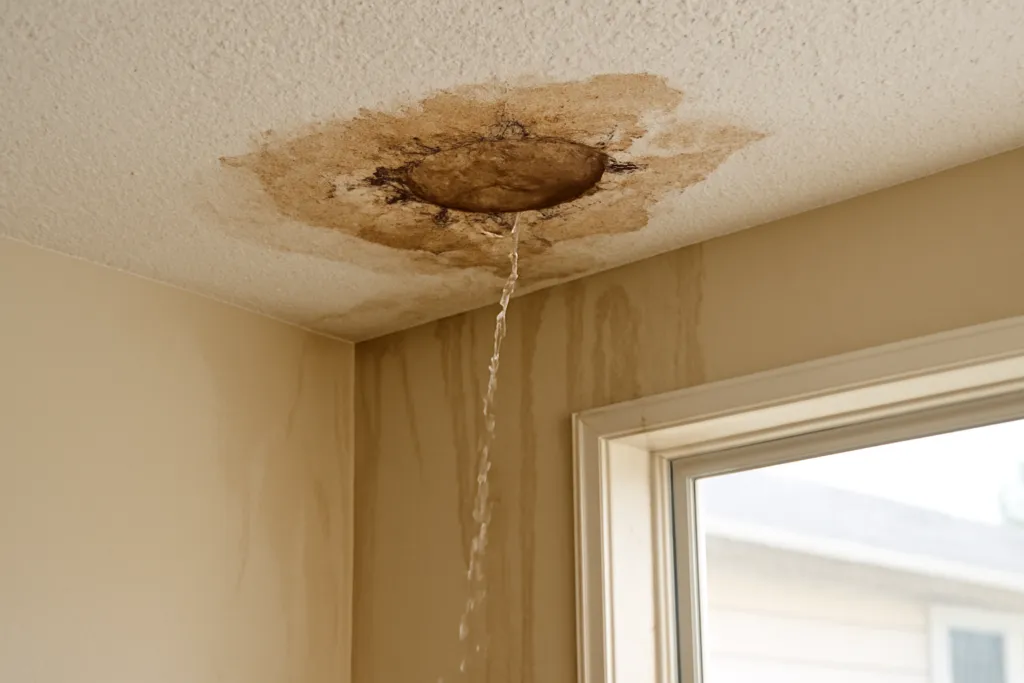
Is a Sagging Water-Damaged Ceiling Dangerous?
Yes. A ceiling that sags or bulges from water is carrying weight it was never built to hold, and wet drywall loses much of its strength. It can drop suddenly, bringing wet insulation and water down with it. Clear the room, turn off power to the fixtures in that ceiling, stop the water source, and call for help.
Water is heavier than most people expect. A single gallon weighs about 8.3 pounds, and a leak that pools above the drywall for a few hours, plus soaked insulation on top, can add up to more than a ceiling panel can carry.
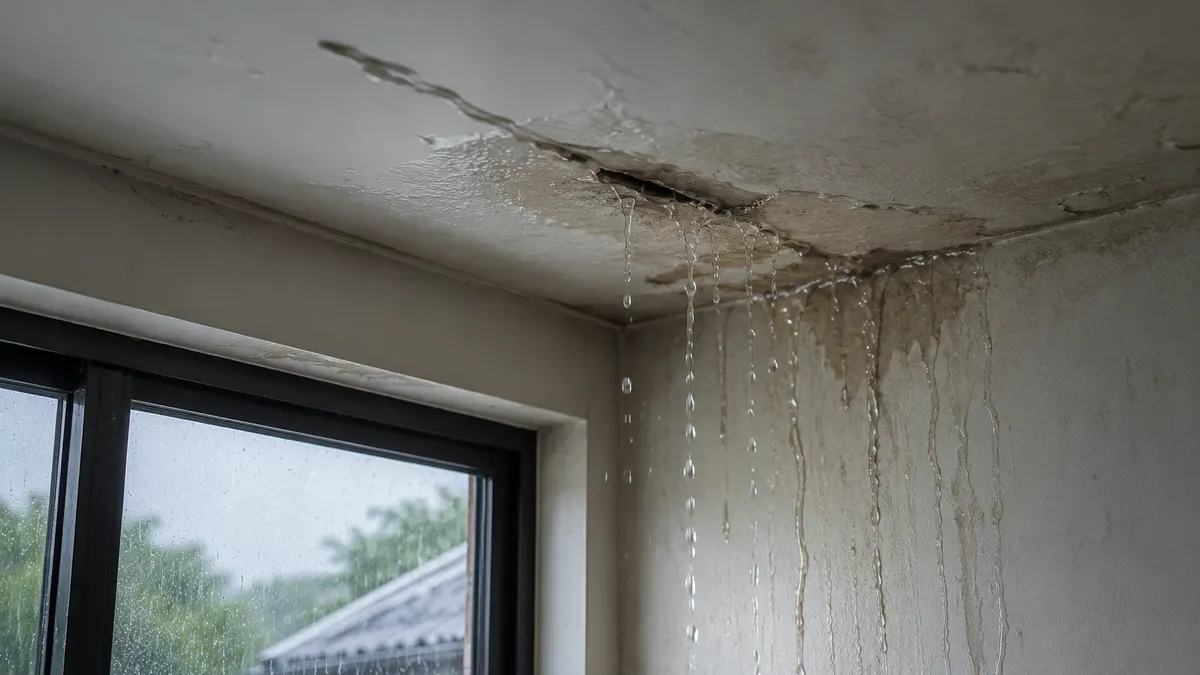
Warning Signs a Ceiling Could Come Down
- A bubble or "water balloon" forming in the paint
- Drywall dipping between the ceiling joists, or seams opening up
- Cracks spreading out from a stain
- Water dripping from a light, fan or smoke detector
- Brown, soft or crumbling drywall
- Creaking or popping sounds overhead
- In older plaster ceilings: plaster pulling away from the wood lath, or a hollow sound when tapped

How Serious Is It?
| What You See | Risk | What to Do |
|---|---|---|
| Old stain, ceiling firm and dry | Low | Find the source and plan the repair |
| Fresh stain, ceiling still firm | Moderate | Stop the source and start drying soon |
| Soft spot or peeling paint | High | Stop the water, protect the floor, call |
| Bulge or visible sagging | Very high | Clear the room, power off, call now |
| Water coming through a light fixture | Very high, electrical hazard | Breaker off, stay out of the room |
What to Do in the Next 10 Minutes
- Clear the room. People and pets out, then valuables if you can grab them without standing under the sag.
- Kill the power. Switch off the breaker for that room's lights and ceiling fan, as long as you can reach the panel without standing in water.
- Stop the water. If it is plumbing, close the main. Here is how to shut off your main water valve fast.
- Protect the floor. Lay a tarp and buckets around the area, not directly beneath the lowest point.
- Record it. Photos and a short video help with the insurance claim.
- Call for help. A sagging ceiling is an emergency, day or night.
Should You Poke a Hole in a Ceiling Water Bubble?
You will see this advice online, and it can work for a small paint bubble on a ceiling that is otherwise firm: stand to the side, put a bucket underneath, and make a small hole at the lowest point so the water drains in a controlled way. Never do it on a ceiling that is sagging across a wide area. Releasing the pressure can bring the whole section down at once. If you are not sure which one you have, leave it alone.
Popcorn Ceilings in Older Tulsa Homes
Many Tulsa homes built before the 1980s have textured "popcorn" ceilings, and some of those textures contain asbestos. A wet popcorn ceiling should not be scraped, sanded or cut until a sample has been tested. This matters more than people think when a crew is about to remove a wet section.
What Happens After the Ceiling Is Made Safe
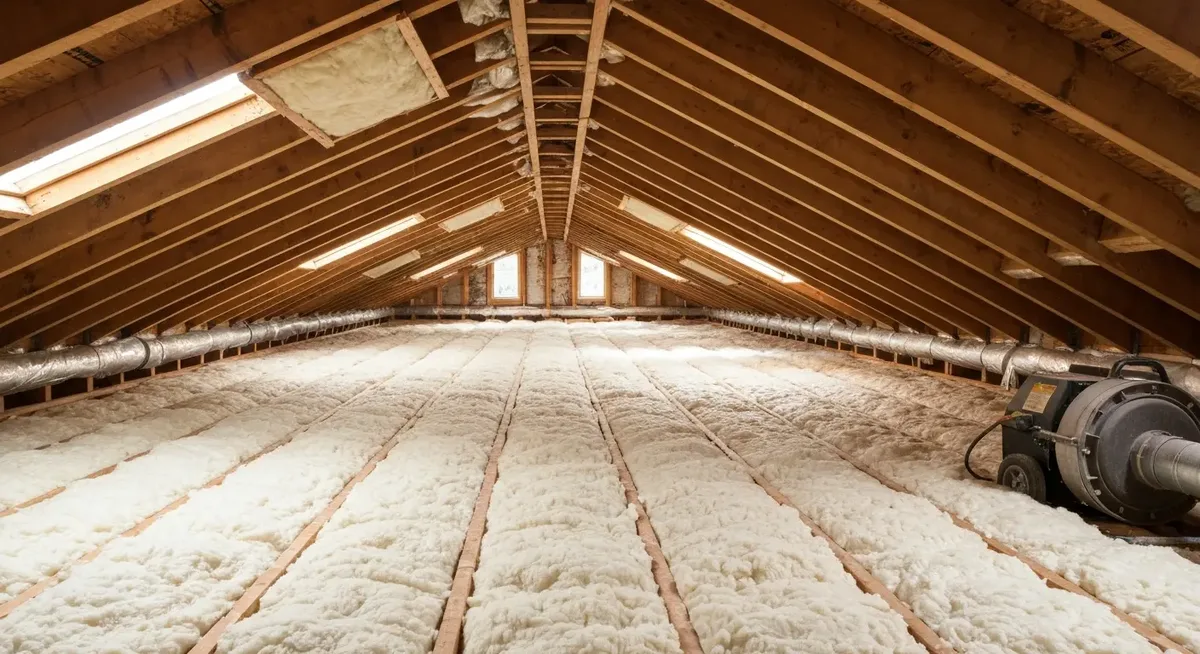
- The water above the ceiling is removed and the soaked insulation is pulled out.
- Sagging drywall is cut out. Drywall that has bowed from water almost never goes back up flat.
- The attic, framing and remaining ceiling are dried with dehumidifiers and air movers, with moisture readings until they reach normal levels.
- New drywall, texture and paint go up once everything is confirmed dry.
That full sequence, from tear-out to the finished ceiling, is ceiling water damage restoration. If the ceiling stayed wet for several days, it is worth adding mold inspection and testing before the new drywall closes it in.
What Tulsa Homeowners Ask About Sagging Ceilings
What Tulsa Homeowners Ask About Sagging Ceilings
There is no safe timeline. It depends on how much water is above it, how long it has been there and how old the drywall is. Some ceilings hold for days; some drop within an hour.
Rarely. Once wet drywall sags, it stays deformed even after it dries, and the fasteners have usually pulled through. It gets replaced.
Most often a pipe in the attic that froze and split, then started leaking during the thaw. That is a burst pipe in the attic, and the ceiling below takes the water first.
If a sudden event like a burst pipe or storm caused it, the damage is commonly covered by Oklahoma homeowners policies. Slow leaks are often not. Your insurer decides.
Do Not Wait
Ceiling Sagging Right Now? Call Now.
Clear the room and call (918) 347-0890. A ceiling water damage crew is dispatched immediately anywhere in the Tulsa metro, day or night.
24/7 Emergency Helpline
(918) 347-0890Keep Exploring